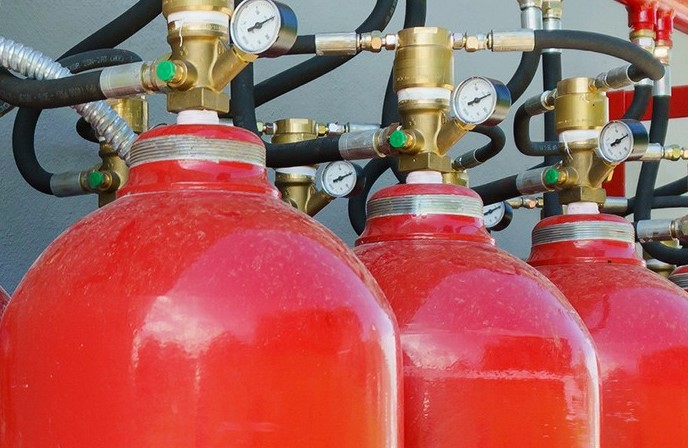

What is FM-200 fire suppression system?
FM-200, chemically known as 1,1,1,2,3,3,3-Heptafluoropropane, is a clean, gaseous fire-extinguishing agent designed for rapid and residue-free suppression. As a non-conductive solution, it safeguards sensitive environments where water-based systems could cause damage—making it ideal for data centers, computer rooms, and telecommunication facilities.
OUR BRANDS






KEY BENEFITS
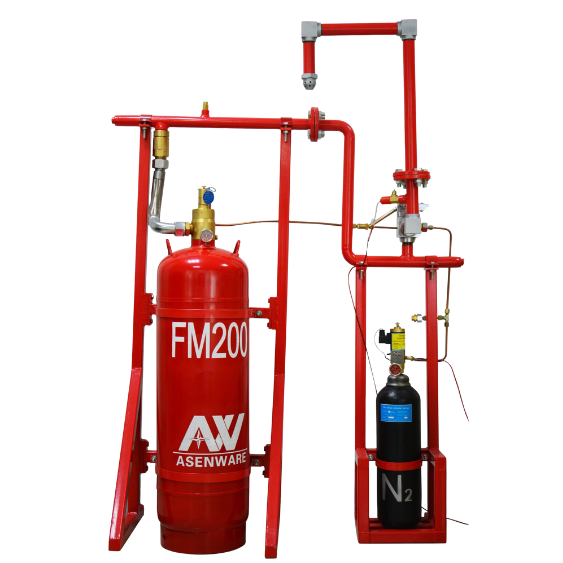
KIND OF FM-200
FK-5-1-12 Clean Agent Fire Suppression System
A next-generation Halon 1301 replacement, FK-5-1-12 offers a waterless, environmentally friendly fire suppression solution
The FK-5-1-12 clean agent is safe for human occupancy, features an atmospheric lifetime of less than 5 days with negligible Global Warming Potential (GWP), has zero Ozone Depletion Potential (ODP), is listed under the U.S. EPA SNAP program, discharges rapidly in 10 seconds or less, complies with NFPA 2001 standards, holds both UL and FM approvals, and is also available as a marine system with USCG and ABS certifications
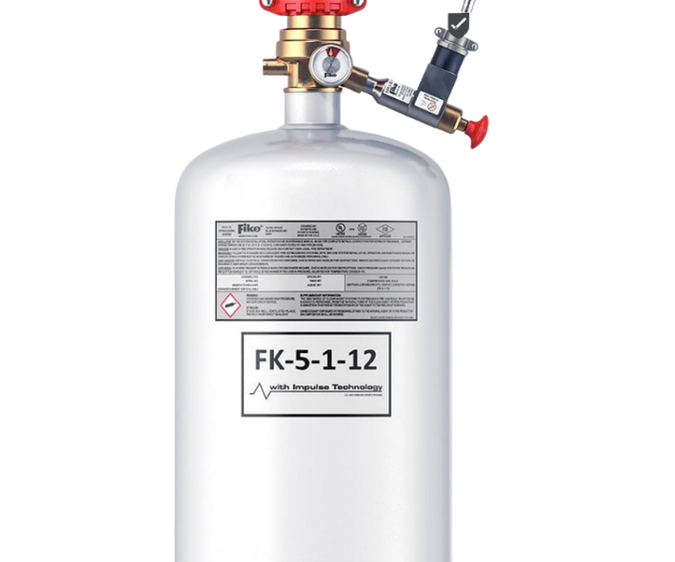
What is FK-5-1-12
Chemically identified as dodecafluoro-2-methylpentan-3-one (CF₃CF₂C(O)CF(CF₃)₂), FK-5-1-12 consists of carbon, fluorine, and oxygen
Its primary extinguishing mechanism is heat absorption, with a secondary effect of chemical interruption through thermal decomposition in the flame; it leaves no residue, is electrically non-conductive, and is safe for use in occupied spaces—aligning seamlessly with both safety and sustainability objectives.
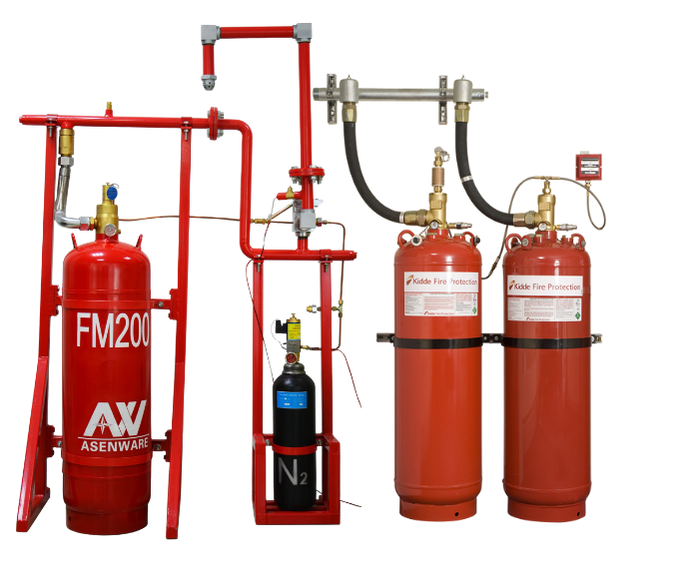
FM-200 vs Novec-1230
FM-200™ and Novec™ 1230 are clean agents safe for occupied spaces and sensitive equipment, leaving no residue behind. FM-200 may require fewer or smaller cylinders but has a higher Global Warming Potential, leading to its phasedown and tighter production controls.
Clean agent vs Carbon Dioxide
The key difference between clean agents and carbon dioxide lies in toxicity. CO₂ suppresses fires at concentrations that can be fatal, while clean agents are typically deployed in occupied spaces at safe, non-toxic levels.